
Choosing an xFusion platform for local AI
Compare GB10, M495/M395, workstations and GPU servers through software fit, memory and a practical local-AI pilot.
1. Define the workflow before the device
Local AI can mean a developer running experiments, a team searching private documents, or a shared inference service. Write down which workflow you need, who uses it and where its data comes from. Separate interactive inference from fine-tuning or training: they put different demands on memory, accelerators and scheduling. Include context length, precision, concurrent users and permitted data movement. This turns a desktop-versus-server discussion into a configuration decision that a pilot can actually test.
2. GB10 and M495/M395 use different ecosystems
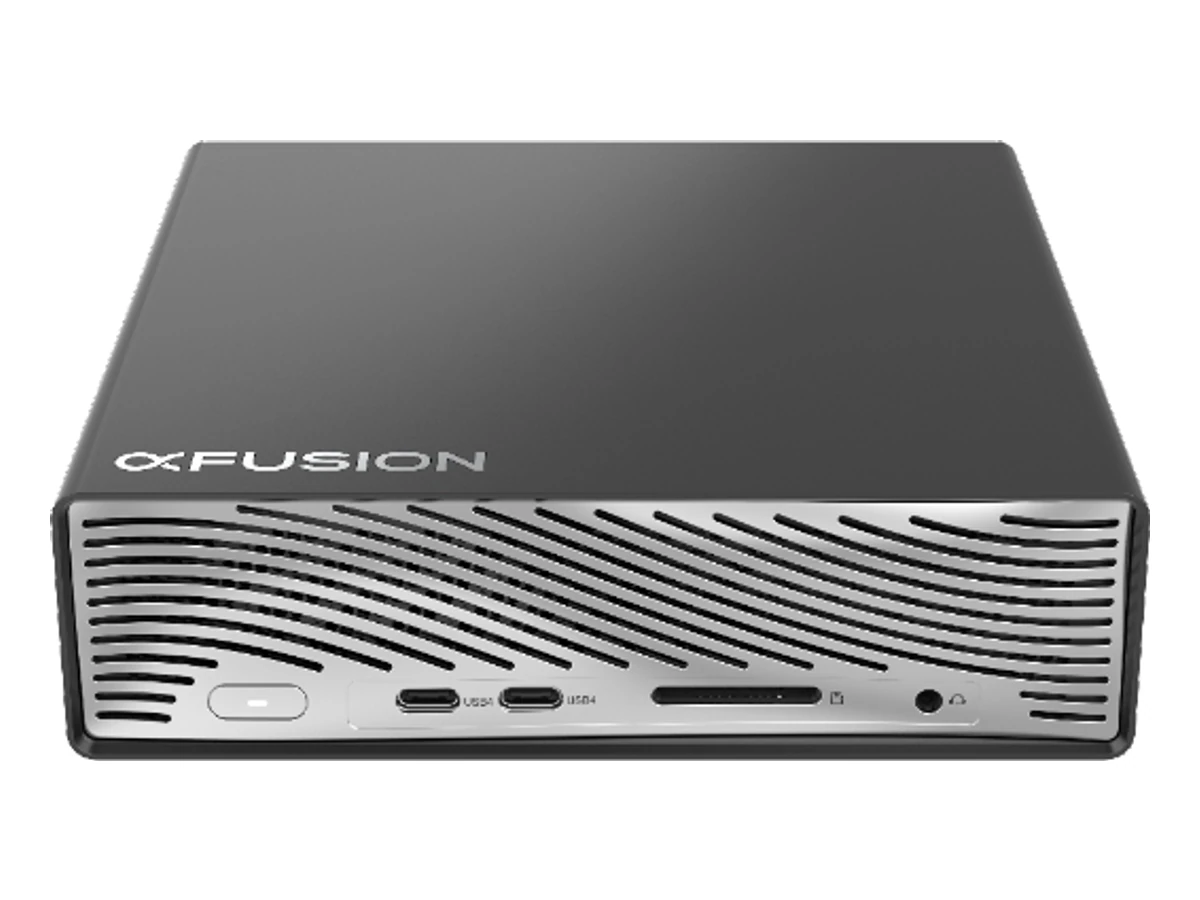
FusionXpark GB10 combines NVIDIA Grace Blackwell with a 20-core Arm CPU, 128 GB unified LPDDR5x memory and preinstalled DGX OS. The FusionXpark M family instead uses AMD/x86: M495 lists Ryzen AI Max+ PRO 495, Radeon 8065S and 192/128 GB memory; M395 lists Ryzen AI Max+ 395, Radeon 8060S and 128 GB. Its published operating-system choices include Windows 11 and Ubuntu 24.04. Check your application binaries, model runtime and drivers against the chosen architecture rather than treating the desktops as interchangeable.
3. Keep workstation and office-AI scope clear
FusionXtation X3 8000 and X3 8000 Gen2 are separate workstation generations. For an engineering application, assess the CPU, professional graphics, memory population and software certification together. TokenBox is an announced on-premises office-AI offering, while TokenBox A1 is a named support-catalogue platform. Request the exact accelerator configuration and hardware bill for each. Define the operating environment and application scope in the proposal. Confirm whether the machine serves one engineer, a shared office service or both, how users connect and how access is controlled.
4. Know when to move to a GPU server
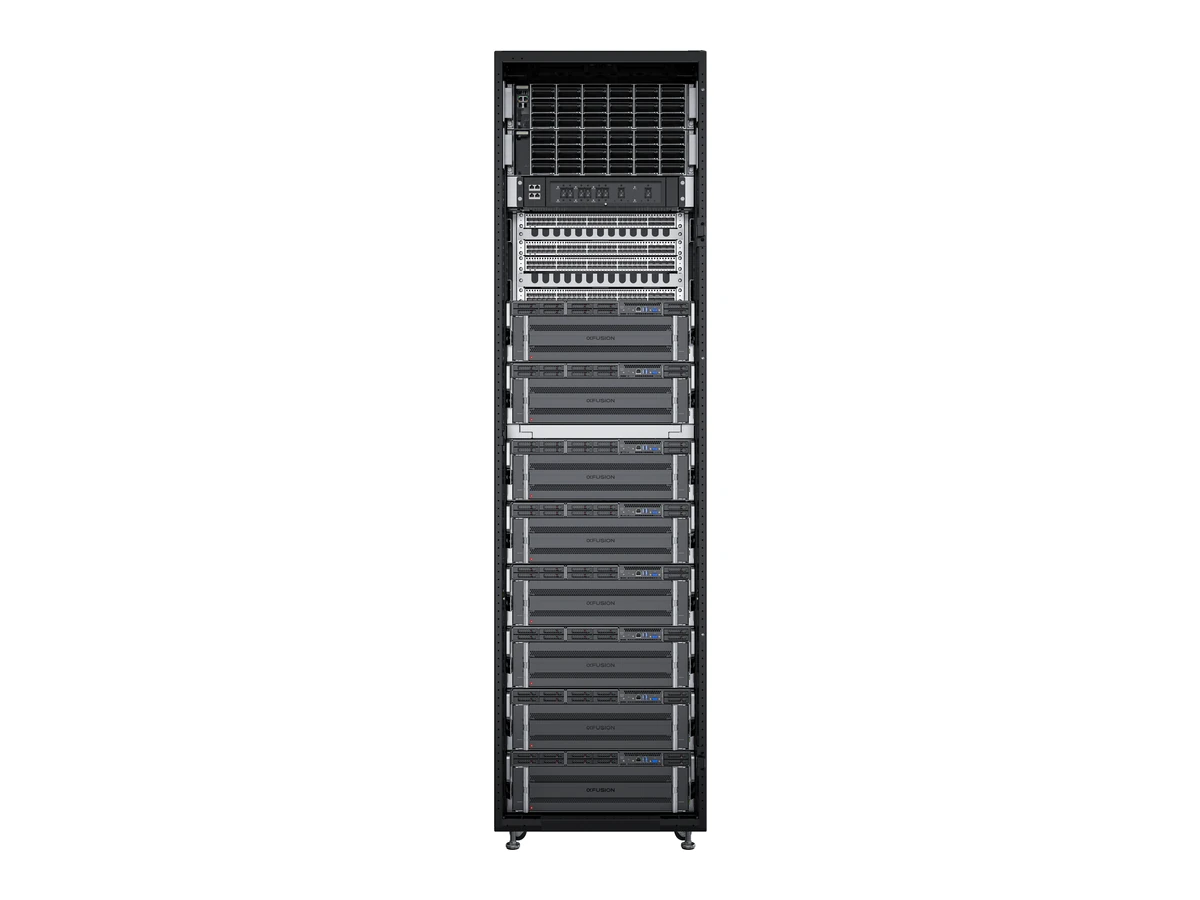
A shared service may need a GPU server when the tested memory footprint, concurrency or integration requirements exceed the desktop design. G6550 V8 documents ten dual-width GPUs in 6U; G8550 V8 documents sixteen GPUs in 10U. That also introduces rack, power, airflow, networking and operational requirements. Unified desktop memory and server accelerator memory are different architectures. Compare the same model, precision and request pattern on each candidate. Keep training, fine-tuning and inference results separate, and measure data transfer rather than assuming every accelerator is continuously busy.
5. Scope the application and licence layer
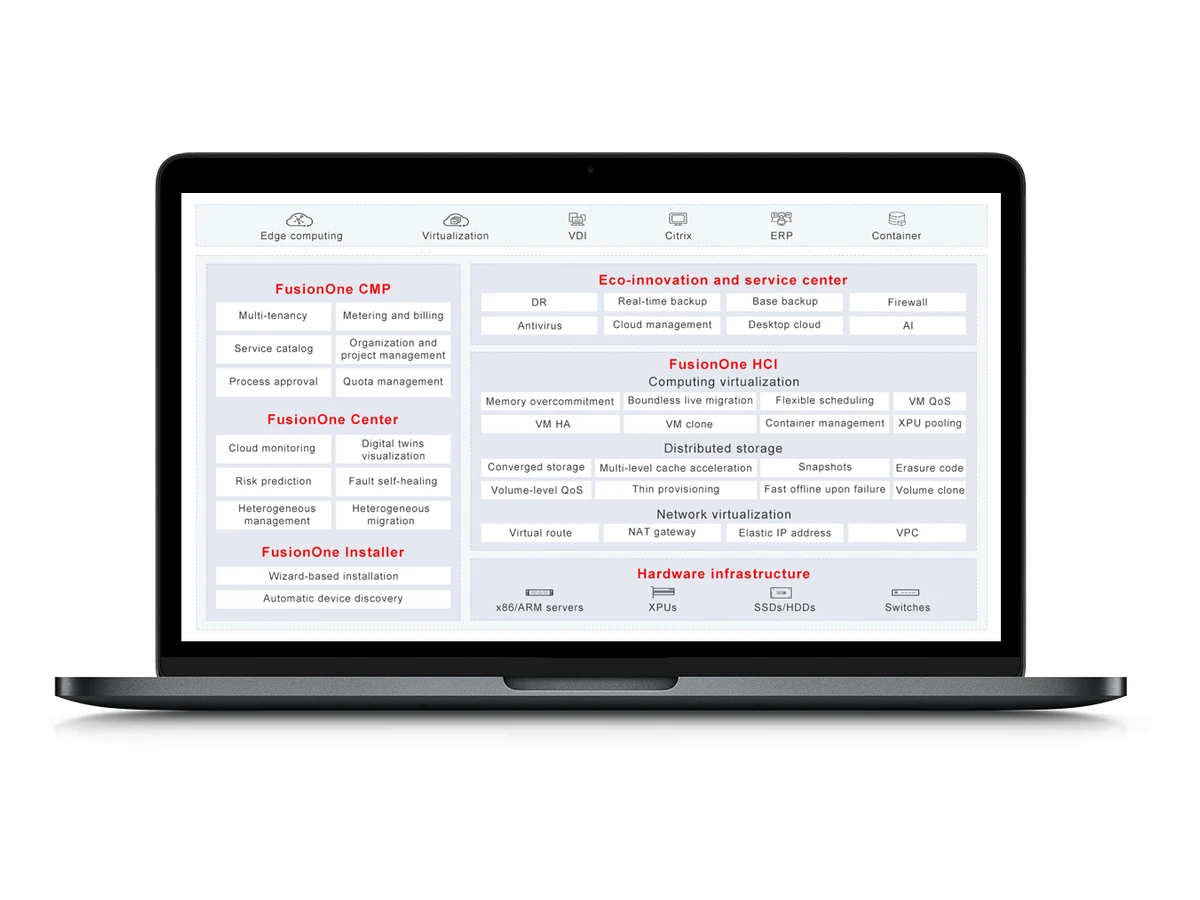
FusionOne AI adds a compute/model-service and operations layer, including token metering. A knowledge assistant needs document ingestion, permissions, retrieval evaluation and application integration. Identify who supplies the model, runtime, connectors and licences, then agree update and support terms. For GB10, confirm whether an NVIDIA AI Enterprise licence is included and specify its term and usage rights in the proposal. Assess the published FP4/sparsity compute rating separately from the application response rate measured in your pilot. Base the budget and acceptance criteria on the actual licensed stack and workload.
6. Make the pilot decide
Use representative data and record both successful responses and failure cases. Set latency, concurrency, quality and access-control thresholds before the trial; include restart and recovery behavior. A useful enquiry contains the application, model format, dataset characteristics, user count and existing software environment. SOFCONS can use that brief to frame a desktop, workstation or server configuration and the integration work. The decision table keeps platform fit separate from licence scope and gives the pilot a concrete handover target instead of relying on an isolated hardware headline. Include the software version in every pilot result.
| Decision | Information to request | Acceptance |
|---|---|---|
| Platform fit | Architecture, runtime and model precision | Application runs with the agreed dependencies |
| Shared use | Memory footprint, users and request mix | Quality and response time under concurrent load |
| Production scope | Licences, connectors, permissions and support | Documented ownership, recovery and handover |
Plan your IT infrastructure
Discuss server and platform selection for your applications, AI workloads and data center requirements.
Explore the technologies
- FusionXpark GB10 ↗
- FusionXpark M Series ↗
- X3 8000 Gen2 ↗
- TokenBox™ A1 ↗
- TokenBox ↗
- G6550 V8 ↗
- G8550 V8 ↗
- FusionOne AI ↗
- FusionXpark GB10 — technical document ↗
- FusionXpark M Series — technical document ↗
- X3 8000 Gen2 — technical document ↗
- G6550 V8 — technical document ↗
- G8550 V8 — technical document ↗
- FusionOne AI — technical document ↗
Putting it into practice
Reconciling an xFusion rack, power and cooling design
Match the exact server, FusionPoD revision, power shelf and facility loop before committing a rack-scale configuration.
Selecting the xFusion software stack by layer and version
Separate device management, fleet operations, operating systems and workloads, then align licences, support and integration acceptance.