
HuaKun liquid cooling: from server to facility design
Compare cold plate, spray and immersion through node fit, networking, heat rejection, U/OU planning and service procedures.
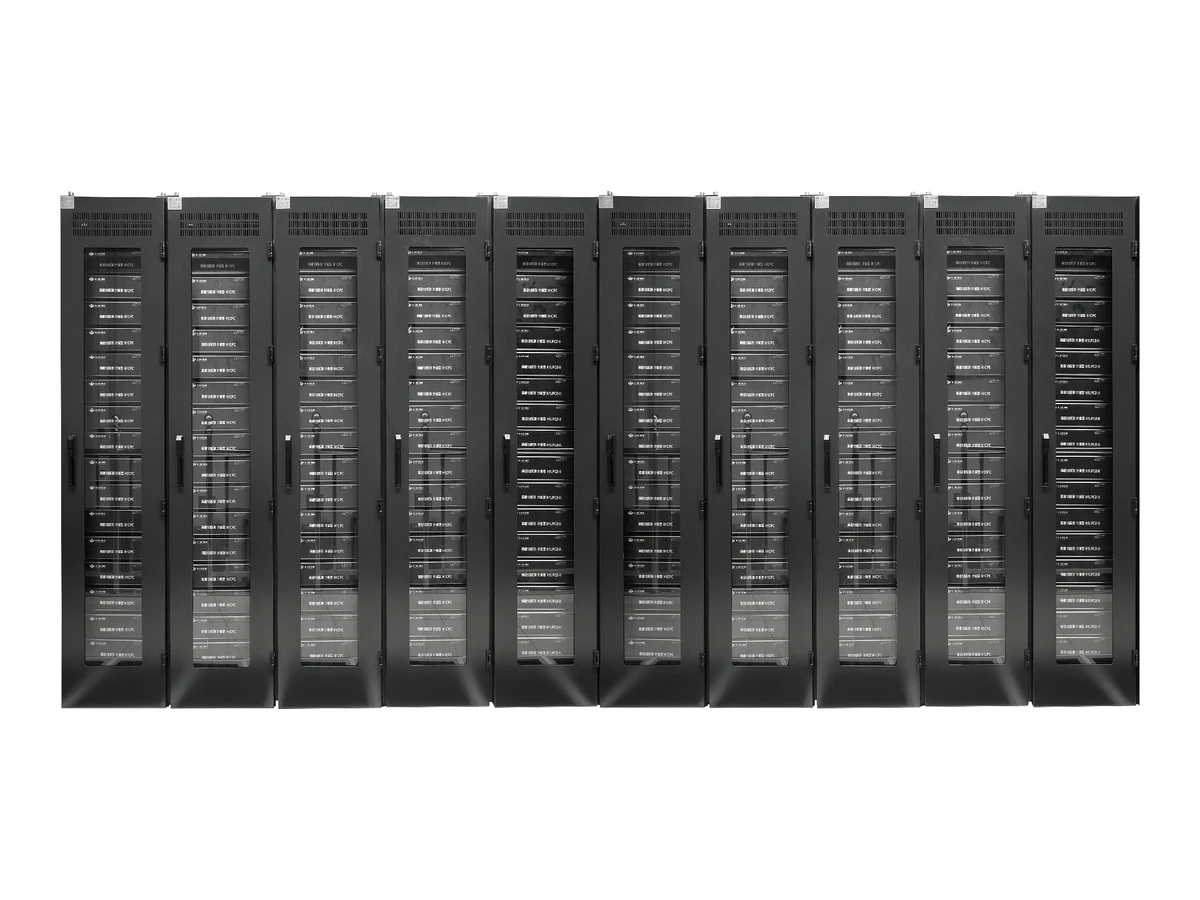
Cooling is a facility decision
Selecting a liquid-cooled server starts with deciding where the server-room heat will go. Heat transferred from processors to fluid still needs a facility loop and a final heat-rejection path. Establish the existing system’s capacity, operating pattern, power redundancy and service access. Define the supply boundary explicitly: server, cabinet, pumps, heat exchanger, pipework, monitoring and facility works need named responsibilities. A server cooling method alone does not establish whole-project efficiency. The buyer needs a complete thermal path and an operable maintenance plan.
Cold plate, spray and immersion
These approaches are not simply different settings on the same equipment. TG125C B2 is a dual-socket 1U cold-plate server example. HC7000 is a modular system combining spray-cooled cabinets, power distribution and environmental monitoring; TG225S B1/B2 is the associated spray-node family. The immersion portfolio includes distinct compute, storage, AI, networking and cabinet components. Choosing among these approaches changes service procedures and the interface with the facility. An ordinary air-cooled node should not be assumed compatible with a liquid-cooling system.
| Approach | Design question |
|---|---|
| Cold plate | Server loop, connections and heat still removed by air cooling |
| Spray | Compatible node, cabinet system and service access |
| Immersion | Fluid compatibility, node removal and networking |
Nodes, networking and U/OU
K121L B1 is a 1OU Kunpeng compute node and K221L B1 a 2OU storage node. X121L B1 and X221L B1 use third-generation Intel Xeon; X225L B2 and AT3518L G4 use fourth-generation platforms. Do not equate OU with U or infer cabinet compatibility from height alone. KT1211-06S is a horizontal 8U single-phase immersion cabinet; mechanical fit requires an explicit layout. CS3900-48T6X management and CS5800-48Y8C data switches show that networking components also need their own selection.
Design the service procedure early
Describe node removal, fluid handling, leak response and restart in the service plan. Confirm fluid, seal, cable and material compatibility for the exact system. Assign ownership of monitoring and alarms, and identify spare components. Agree which equipment remains operational and which shuts down safely after a pump, power or facility-loop failure. AI clusters may retain air-cooled interconnect cabinets, so the heat calculation must cover the entire installation. The maintenance route should be practical for the people who will operate the site.
A comparable proposal scope
Compare proposals for the same compute configuration, heat load and facility boundary. State whether the cabinet scope includes facility pipework and final heat rejection. Identify installation, initial fluid filling, operator training and commissioning separately. If existing enterprise servers or storage nodes remain, retain their air-cooling load in the design. This scope breakdown makes it possible to compare an equipment offer with a complete system proposal and to identify missing responsibilities before procurement. It also keeps future expansion tied to the available facility capacity.
Acceptance and procurement boundaries
Acceptance should exercise the agreed compute load, monitoring, alarms and safe shutdown behavior together. Keep observation points and environmental conditions with the results. A server-level measurement is not a whole-facility outcome. A SOFCONS enquiry can connect equipment, facility interfaces, integration and handover documentation in the same project. Existing layouts, planned nodes, electrical capacity and service constraints provide a useful starting brief. ARM migration and AI scale selection should progress alongside cooling design, so application, hardware and facility decisions remain consistent.
Plan your IT infrastructure
Discuss server and platform selection for your applications, AI workloads and data center requirements.
Explore the technologies
Putting it into practice
HuaKun Kunpeng/ARM: a migration plan for enterprise applications
A practical guide to ARM compatibility, pilot selection and staged migration, from application binaries to recovery tests.
HuaKun AI infrastructure: workstation, server or cluster?
Choose between local inference, PCIe accelerators, modular platforms and clusters using memory, software fit, concurrency and a pilot.