
HuaKun AI infrastructure: workstation, server or cluster?
Choose between local inference, PCIe accelerators, modular platforms and clusters using memory, software fit, concurrency and a pilot.
Define the workload for your AI service
AI infrastructure selection is broader than choosing a model name. A knowledge assistant, image-analysis pipeline and model-training job have different resource profiles. Record the exact model revision, input and output sizes, user population, concurrent requests and acceptable latency. An interactive service may prioritize time to first response and sustained request load; batch processing may prioritize a completion window. Include the location of sensitive data and the required business behavior during an outage. These requirements create a testable service profile before hardware is compared.
Memory and software fit
Model weights are only part of the memory requirement. Inference also needs room for context, intermediate results, runtime overhead and concurrent requests. Evaluate quantization together with answer quality and compatibility. Host RAM, accelerator memory and disk capacity are separate resources. The accelerator stack must support the model’s operators, framework and container versions. Loading a model is insufficient: representative requests, long context and peak concurrency must work in the pilot. Training adds optimizer state and checkpoint requirements, so an inference configuration cannot be assumed suitable for training.
From workstation to modular server
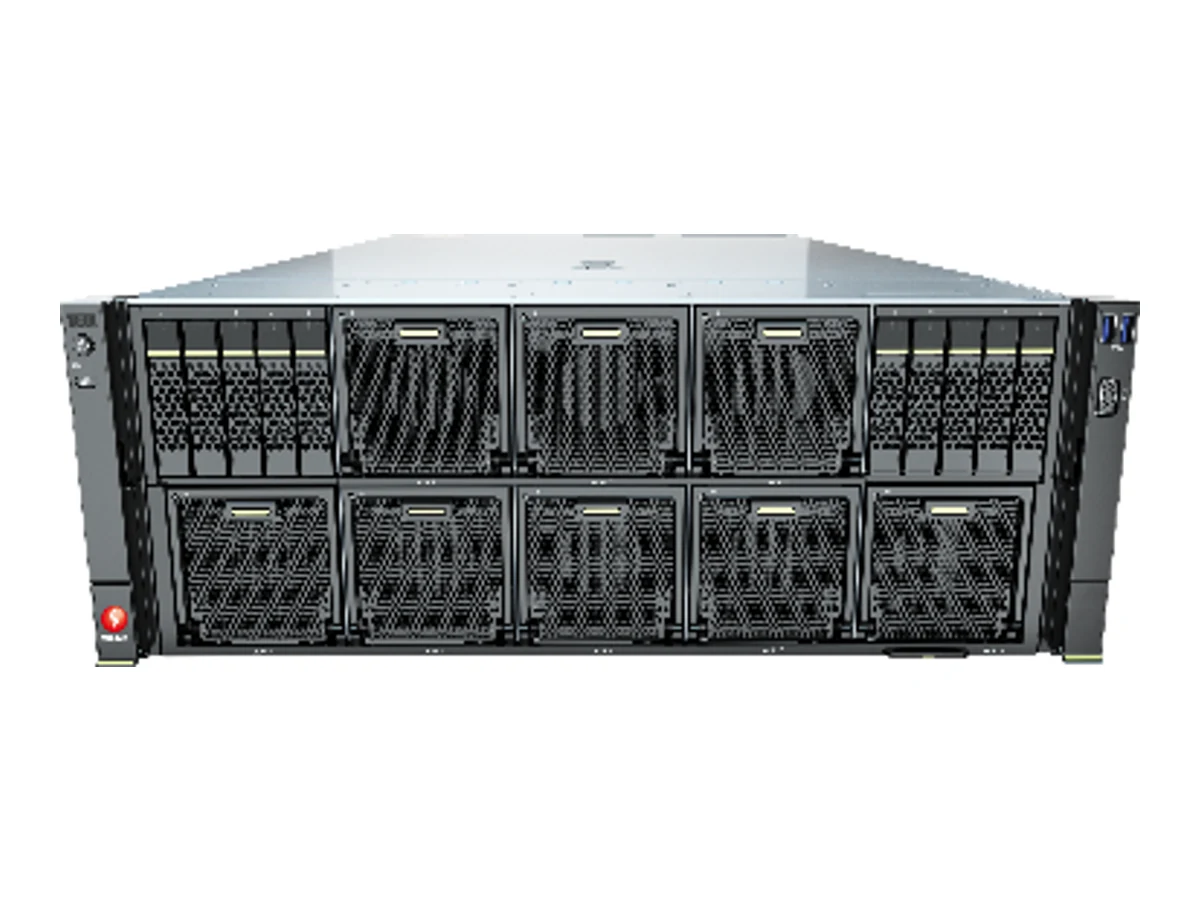
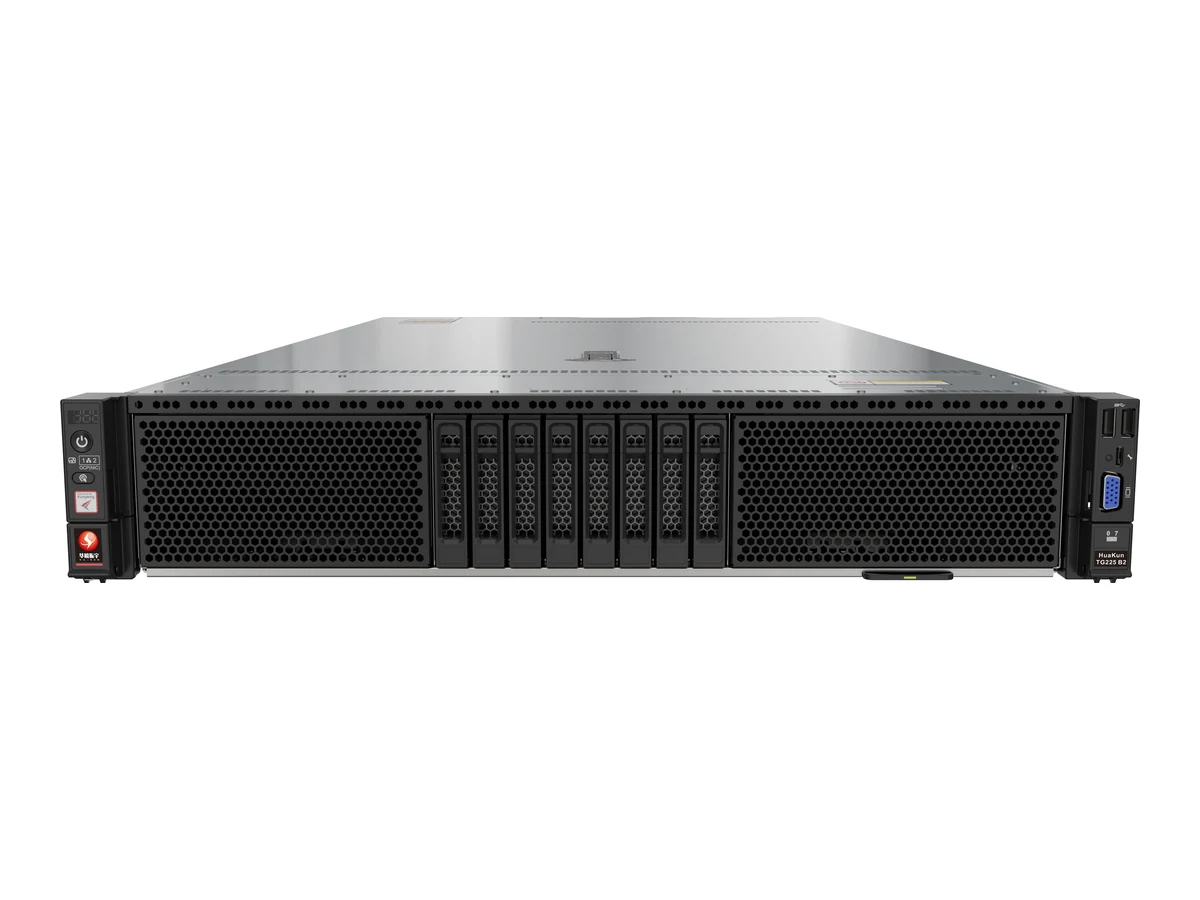
AT600W is a workstation starting point for local user workflows. For centralized PCIe inference, compare AT225 and AT225 B2 separately: AT225 uses DDR4, while B2 supports up to six Atlas 300I Duo cards. AT9508 G3 provides a 4U platform for up to ten dual-width accelerator cards. In modular systems, AT548 Inference lists eight A2G4 NPUs and AT548 Training eight A2G3 NPUs. Their official naming links to AT3500 G3 and AT800 (Model 9000) A2 do not replace verification of the exact module generation.
Choosing the scale
A cluster is more than additional accelerators. Model partitioning, accelerator interconnects, data reads and checkpoint writes interact. Moving toward AT900 A2 PoDc or SuperPoD families requires multi-node software validation together with facility power and cooling readiness. TGDataXAI addresses application workflows, TGHCI resource management and HKStor the storage layer; their different roles belong in the architecture.
| Workload | Starting point |
|---|---|
| Local interactive work | Workstation and application pilot |
| Shared inference service | PCIe or modular inference server |
| Multi-node training | Cluster, interconnect and facility design |
From model to application outcome
For a knowledge assistant, include source documents, index updates, access permissions and answer citations in the pilot. A fast model does not make incorrect or unauthorized information acceptable. Business-owned sample questions should cover the required languages, missing information and ambiguous requests. Define escalation when the user cannot obtain an answer, together with an operational log. This evaluation distinguishes application quality from server load testing and brings both into acceptance. It also gives the operations team a way to recognize degradation after deployment.
From pilot to procurement scope
Record answer quality, latency, concurrency, memory use, failed requests and recovery behavior in the pilot. Compare results using the same model, precision and context. SOFCONS can connect AI automation with server sourcing, knowledge sources, access rights and existing-system integration in one scope. The proposal should identify software versions, hardware configuration, power and cooling conditions, and acceptance scenarios. Include the model and user profile in the enquiry so the pilot configuration reflects the business task and the production operating conditions.
Plan your IT infrastructure
Discuss server and platform selection for your applications, AI workloads and data center requirements.
Explore the technologies
Putting it into practice
HuaKun Kunpeng/ARM: a migration plan for enterprise applications
A practical guide to ARM compatibility, pilot selection and staged migration, from application binaries to recovery tests.
HuaKun liquid cooling: from server to facility design
Compare cold plate, spray and immersion through node fit, networking, heat rejection, U/OU planning and service procedures.