
Deduplication and compression: assess capacity savings on your data
Measure reduction on data representative of your workload. Sample selection, a 2.5:1 calculation and growth scenarios help size the initial drives and later expansion.
Nominal drive capacity
After protection, reserves and system allocations
With data type and reduction assumptions
Effective capacity depends on the data. Licensed capacity is checked separately.
The same data in less physical space
Deduplication stores one copy of repeated blocks, while compression represents unique data more compactly. With suitable data, these technologies help accommodate more volume on existing drives and inform expansion planning. For procurement, the key question is the reduction ratio achieved by the intended workload.
Include virtual-machine images, databases, media files and already compressed copies in proportions representative of the operating environment. Evaluate each class separately. The stage at which encryption occurs also matters because the form of the data reaching the array affects reduction opportunities.
Conditions that make PoC results comparable
| Field | Record |
|---|---|
| Sample | Source class, selection method, size and agreed confidential-data handling. |
| Environment | Product, software version, enabled functions and prior data processing. |
| Accounting boundary | Logical used space and physical usage for the same dataset at the observation time, in matching units; not cumulative host writes over a period. |
| Time | Initial load, change cycle, retention and repeat observation time. |
How to interpret the reduction ratio
In an illustrative calculation, 10 TiB of logical data occupies 4 TiB of physical space for the same dataset: 10/4 gives 2.5:1. Measure logical and physical space at the same time, using the same dataset boundary and units. This ties the result to a specific data class.
When comparing system metrics, check what each formula includes. Allocated but unused space and blocks shared by snapshots may appear in different accounting metrics. Separate those effects from deduplication and compression so that the same benefit is counted once.
From measurement to purchase and expansion planning
Follow the initial load with observation across the data-change and retention cycle. Results by data class support conservative, expected and favourable growth scenarios. These scenarios help size the initial drives, headroom and future expansion requirements.
Acceptance criteria include the sample, measurement method and required outcome. Licence quantities follow the product’s accounting rules and do not automatically change with a higher reduction ratio. If a guarantee programme is included, assess its written data and configuration eligibility conditions alongside the purchasing requirements.
Data storage project
Discuss storage architecture for your applications, data volumes and growth plans.
Explore the technologies
Putting it into practice
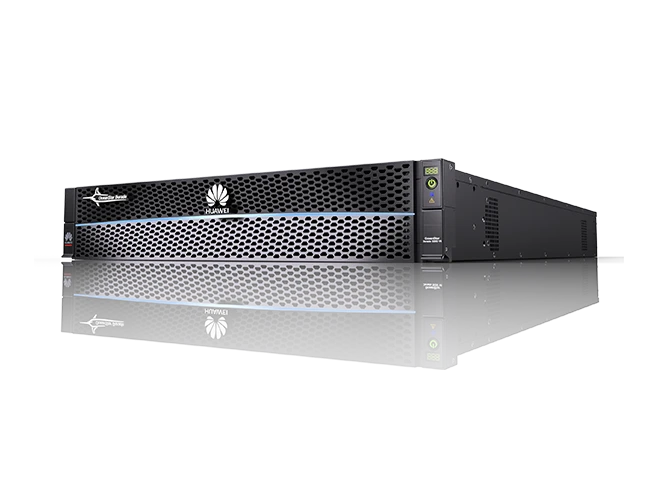

Huawei Dorado for Irshad Telecom: from design to acceptance
An NVMe all-flash storage platform for Irshad Telecom. SOFCONS engineers brought design, supply, installation, configuration and acceptance testing together in one complete engagement.
Nominal drive capacity
After protection, reserves and system allocations
With data type and reduction assumptions
Effective capacity depends on the data. Licensed capacity is checked separately.
Raw, usable and effective: calculating storage capacity
Keep raw, usable and effective capacity distinct. Worked examples for TB/TiB conversion and free-space headroom help compare storage proposals.
Storage TCO: compare proposals on equal terms
Compare Huawei, Dell and NetApp offers for the same workload, usable capacity and support period. A cost matrix and growth calculation show how expansion affects the budget.