
Primary storage and backup: dividing the roles of Dorado and OceanProtect
Size workload and recovery requirements separately for Dorado and OceanProtect. Connect capacity, software, connectivity and application recovery tests within one architecture.
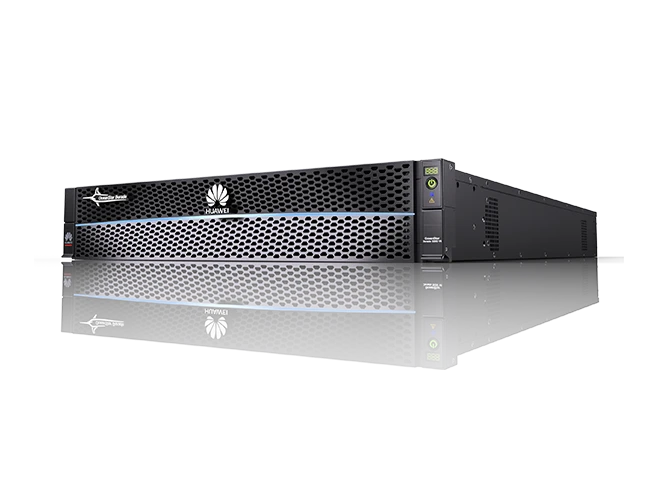
Design the workload and recovery process together
Primary storage holds an application's current data and serves its reads and writes. Backup storage provides a separate resource for returning to earlier data states. Selecting systems such as Dorado and OceanProtect together allows each role to be sized independently: operational latency and load on one side, backup window, retention and recovery on the other.
The logical chain is: application and primary data → compatible backup software → copy storage → selected recovery environment → application verification. This chain identifies responsibilities; the actual data path depends on the software and protocol selected.
| Component | Primary responsibility | Sizing input |
|---|---|---|
| Primary storage | Current application I/O | Latency, workload profile, growth |
| Backup storage | Storing and reading copies | Changed data, retention, recovery load |
| Backup software | Jobs, catalogue, consistency and recovery | Applications, versions, licences |
| Server and network environment | Data path and recovery compute resources | Connections, compatibility, resource headroom |
Fast access for applications, dedicated backup copies for recovery.
OceanStor Dorado
Production data
Backup software and policies
OceanProtect
Dedicated storage for backup copies
Capacity, retention and recovery speed are planned around business requirements.
Backup storage and software
Huawei distinguishes between Target Storage and Integrated Appliance approaches for OceanProtect. In the first, the system is a storage target for compatible backup software; in the second, the scope of integrated software capabilities is selected separately. The product family name does not establish that particular agents, application support or every licence are included.
Before procurement, establish what manages jobs, where the catalogue resides, how application consistency is achieved and who initiates recovery. The need for an existing backup server, proxy or agent depends on the product and version chosen. Check the operating system, hypervisor, application and storage mode together in the compatibility matrix.
Size capacity against the retention policy
Primary storage sizing considers current data, growth, snapshots and free-space headroom. Backup sizing additionally needs the change rate, full and incremental backup schedules, retained versions and long-term retention policy. Multiplying primary disk capacity by a fixed factor does not replace these inputs.
Both calculations account for RAID, reserves and system overhead within raw capacity. Deduplication and compression depend on the actual data and require their own justification. Licensed capacity also remains a separate line: its accounting rules do not automatically establish usable drive space or protected data volume.
Connections and shared failure points
A storage port's line rate does not determine the speed of the entire backup or recovery process. The source system, server resources, software, network path and target are assessed together. Fibre Channel requires coordination of host adapters, optics, zoning and multipathing; Ethernet requires agreement on the protocol, network settings and bandwidth.
A separate backup enclosure divides physical resources but does not by itself create remote disaster recovery. Shared power, networking, administrator access and location can remain common risks. If protection against site loss or unauthorised deletion is required, copy location, access separation and protection mode need their own design.
Practical example: returning an application to an earlier state
Suppose an incorrect update corrupts data in an accounting application. Primary storage may remain healthy; the required outcome is to return to a suitable earlier version. In a test, the administrator selects the required point from the catalogue, restores the data into an isolated test environment and starts the database according to the application's procedure.
Verification continues beyond copying files: the application must open, control operations must run and the result must be confirmed. Measured recovery time includes preparation, networking and application startup as well as reading data. RPO expresses the acceptable data-loss interval and RTO the target recovery time; these targets come from business requirements and are tested, rather than inferred from equipment names.
A short technical brief before procurement
Gather the following inputs before preparing a specification covering storage systems, software, connectivity and services.
- Applications and versions, data volume, change rate and growth forecast.
- Existing backup software, licences, servers and protocols in use.
- Retention period, business RPO/RTO requirements and recovery priorities.
- Location, power and network design, requirements for a remote copy and separate access.
- Acceptance scenario: which application is restored, who checks it and what result is accepted.
Data storage project
Discuss storage architecture for your applications, data volumes and growth plans.