
Assessing whether an industrial board or panel can be repaired
Identify the board or panel, the symptom and how its functions can be tested. Compare repair and replacement proposals against the same function to restore.
Symptoms, history; mechanics, power, controls
Repair or replacement scope
Result and handover records
Board, panel and machine have separate identities
One machine family may use different board revisions and software versions. Include the machine nameplate, full assembly code and available service history. Photographs help identify the unit but do not replace circuit information or functional testing. Record visible damage separately from the observed malfunction; a component that looks damaged does not by itself establish the entire fault scope.
Assessment sheet
| Question | Required information |
|---|---|
| Which assembly? | Manufacturer, full code, revision, serial number and role in the machine. |
| What was observed? | Error text, circumstances, preceding change and service record. |
| How will it be checked? | Test fixture or actual machine, interface data and authorised verifier. |
| What outcome is acceptable? | Function to restore, test boundary and record of remaining limitations. |
Compare repair and replacement against the same outcome
A repair proposal should separate diagnosis, parts, testing capability and handover conditions. For replacement, check compatible revision, software rights and machine integration. Manufacturer repair programmes cover particular product families and conditions; availability for the actual item needs confirmation. Include assessment charges and the outcome if repair proves impractical in the agreed scope.
Example: the panel powers up but a function is unavailable
An illustrative panel powering up demonstrates that the display receives power. If a process command is not accepted, communications, configuration and connected units may also need assessment. “Display works” and “machine function restored” are separate outcomes. The acceptance sheet must say which interfaces and functions were actually checked.
Agree removal, transport and connection arrangements with the service team using the equipment documentation.
Equipment repair enquiry
Start with the equipment model and fault symptoms to discuss diagnosis and repair options.
Explore the technologies
Putting it into practice
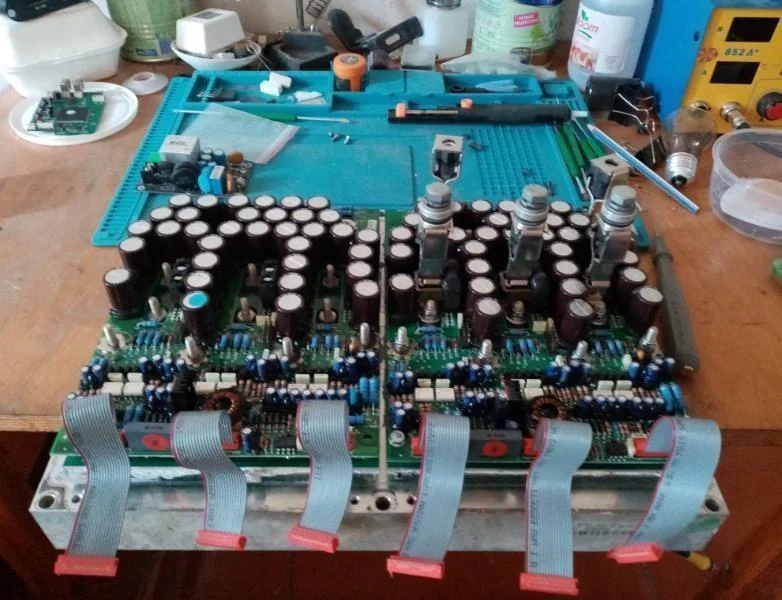

AzLift: electric forklift electronics
Control and charging panels for AzLift electric forklifts: electronic assemblies serving machine functions and battery charging.
Symptoms, history; mechanics, power, controls
Repair or replacement scope
Result and handover records
Machine controls: repair, retrofit or replacement?
Assess mechanical condition, electronics support and required functions separately. Compare repair, retrofit and replacement against the same acceptance criteria and cost scope.